
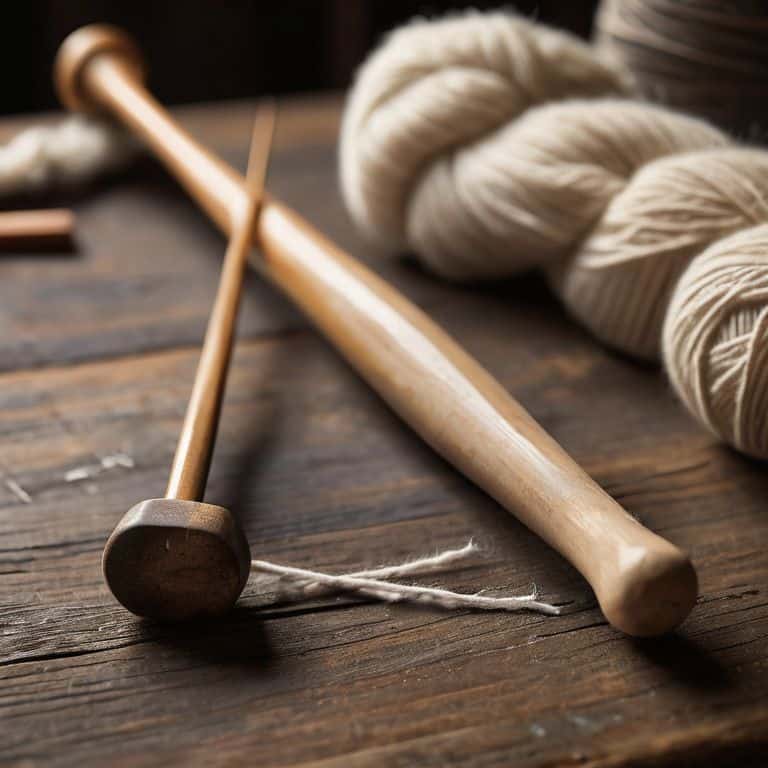
I still remember the day my wife, an avid knitter, came to me with a bent wooden knitting needle, asking if I could fix this frustrating problem. She had been working on a intricate scarf, and the bent needle was ruining her stitches. I, being a carpenter and woodworker, took on the challenge and started researching ways to straighten it. The question on everyone’s mind, including mine, was: can you straighten a bent wooden knitting needle? It turns out, the answer is not as simple as a yes or no.
In this article, I’ll share my hands-on experience and provide you with practical, step-by-step advice on how to straighten a bent wooden knitting needle. You’ll learn about the different methods, materials, and techniques required to rescue your favorite knitting tool. I’ll cut through the noise and give you honest, no-nonsense guidance on what works and what doesn’t. By the end of this guide, you’ll be equipped with the knowledge to fix your bent needle and get back to knitting with ease. Whether you’re a seasoned knitter or a beginner, this article will provide you with the confidence to tackle this common problem and get back to creating something beautiful.
Table of Contents
Guide Overview: What You'll Need
Total Time: 30 minutes to 1 hour
Estimated Cost: $0 – $10
Difficulty Level: Easy
Tools Required
- Hair dryer (for gentle heat application)
- Pencil (for marking the bend)
- Ruler or straightedge (for guiding the straightening process)
- Clamp (for holding the needle in place)
- Rubber mallet or similar tool (for gently tapping the needle into shape)
Supplies & Materials
- Wood glue (in case the needle breaks and needs repair)
- Sandpaper (for smoothing out any rough spots after straightening)
Step-by-Step Instructions
- 1. First, let’s assess the damage and evaluate the extent of the bend. Carefully examine the wooden knitting needle to determine the severity of the bend and whether it’s a simple fix or a more complex repair. This will help you decide the best course of action and the tools you’ll need to rescue your favorite needle.
- 2. Next, gather your tools and materials, including a hair dryer or heat gun, a flat surface, and some heavy objects like books or clamps. It’s also a good idea to have some wood glue on hand, just in case. Make sure your workspace is clear and well-ventilated, as you’ll be working with heat and potentially some strong-smelling adhesives.
- 3. Now it’s time to apply heat to the bent area of the needle. Using your hair dryer or heat gun, carefully warm the wood, moving the heat source slowly back and forth to avoid scorching or burning the wood. This will help loosen the wood fibers and make the needle more pliable.
- 4. With the wood warmed and more flexible, use your hands or a gentle tool like a plastic mallet to carefully coax the needle back into shape. Work slowly and patiently, as you don’t want to apply too much pressure and risk breaking the needle. It’s better to make small, gradual adjustments and check your progress frequently.
- 5. Once you’ve made some progress and the needle is starting to straighten, use your heavy objects to hold it in place while it cools and sets. You can use clamps, books, or even weights to apply gentle, consistent pressure and keep the needle straight. Let it sit for at least 30 minutes to an hour to allow the wood to fully cool and set.
- 6. After the needle has cooled and set, remove the weights or clamps and inspect your work. Check the needle for any remaining bends or warping, and make any necessary adjustments. If the needle is still slightly bent, you can repeat the heating and shaping process as needed.
- 7. Finally, to add an extra layer of protection and help prevent future bending, consider applying a small amount of wood finish or sealant to the needle. This will help protect the wood from moisture and wear, and keep your newly straightened needle in good working condition.
Can You Straighten a Bent Needle
When it comes to fixing warped knitting needles, it’s essential to consider the type of wood used to make the needle. Some woods are more prone to warping than others, and understanding this can help you prevent damage in the first place. For instance, woods like birch or beech are generally more stable than woods like pine or cedar. By choosing the right wood for your knitting needles, you can reduce the likelihood of them becoming bent or warped.
In addition to using the right materials, preventing knitting needle damage is also crucial. This can be as simple as storing your needles in a dry place, away from direct sunlight or extreme temperatures. You can also take steps to maintain your wooden knitting needles, such as applying a wood conditioner or wax to protect the wood from drying out. By taking these precautions, you can help extend the life of your knitting needles and prevent them from becoming bent or damaged.
If your knitting needle does become bent, don’t worry – it’s not the end of the world. With the right techniques, you can restore your bent knitting needles to their former glory. One key thing to keep in mind is to work slowly and carefully when straightening a bent needle, as applying too much pressure can cause the wood to crack or splinter. By being patient and gentle, you can successfully restore bent knitting needles and get back to your knitting projects in no time.
Fixing Warped Knitting Needles at Home
Fixing warped knitting needles at home can be a bit of a challenge, but with the right techniques and a little patience, you can breathe new life into your favorite tools. I’ve found that using a combination of heat and gentle pressure can work wonders for straightening out minor warps and bends. For more severe cases, I’ve had success using a wooden dowel or rod to carefully coax the needle back into shape. It’s all about taking your time and working with the wood, rather than against it.
By applying these methods, you can restore your knitting needles to their former glory and get back to creating something beautiful. Remember, the key is to be gentle and work gradually, as excessive force can cause further damage. With a little practice and care, you’ll be able to fix even the most stubbornly warped needles and keep on knitting.
Restoring Bent Needles With Care
Restoring a bent needle requires patience and gentle handling. I’ve found that using a hair dryer or a warm cloth can help relax the wood, making it more pliable. Apply heat carefully, as excessive heat can damage the wood or cause it to become brittle. Once the wood is warm, use a gentle, consistent pressure to coax the needle back into shape. It’s essential to work slowly and avoid applying too much force, which can cause the wood to snap or splinter.
By taking the time to carefully restore a bent needle, you can extend its life and maintain its performance. I’ve successfully restored many bent needles using this method, and it’s rewarding to see a beloved tool revived and ready for use again.
5 Tips to Rescue Your Bent Wooden Knitting Needle
- Assess the Damage: Before attempting to straighten your bent wooden knitting needle, inspect it carefully to determine the extent of the damage – is it a slight bend or a complete break?
- Choose the Right Tool: Select a suitable tool to straighten the needle, such as a hair straightener, a heat gun, or even a vice – the key is to apply gentle, consistent pressure
- Apply Heat with Caution: If using heat to straighten the needle, be cautious not to apply too much, as this can cause the wood to crack or become discolored – a low-temperature hair straightener can be a good option
- Use a Straightening Jig: Consider creating or purchasing a straightening jig to hold the needle in place while you apply pressure – this can help ensure a smooth, even straightening process
- Test and Repeat: After straightening the needle, test it to ensure it’s straight and functional – if not, you may need to repeat the process, making adjustments as needed to achieve the perfect straightness
Sawdust and Stitches: 3 Key Takeaways
With a little patience and the right techniques, you can breathe new life into a bent wooden knitting needle, saving you the cost of replacing a favorite tool and reducing waste
A combination of careful heat application, gentle bending, and precision shaping can restore a warped needle to its original form and function, making it possible to achieve professional-looking results with handmade repairs
Whether you’re a seasoned woodworker or a beginner in the world of fiber arts, understanding the importance of proper tool maintenance and repair can elevate your craft, allowing you to focus on creating something beautiful and functional from scratch
Conclusion: Reviving Your Trusty Knitting Needle
As we’ve explored the world of bent and warped wooden knitting needles, it’s clear that with a little patience and the right techniques, you can breathe new life into your favorite tools. From carefully assessing the damage to applying gentle heat or using a straightening jig, the process of restoring a bent needle is not only possible but also rewarding. By understanding the properties of wood and how it responds to different treatments, you can confidently fix warped knitting needles at home and get back to creating something beautiful.
As you put down your tools and pick up your yarn, remember that the journey of making something with your own hands is just as important as the end result. The love and care you invest in restoring a bent needle is a testament to the value you place on the craft itself. So, don’t be too hard on yourself if a needle gets bent – see it as an opportunity to get creative, to problem-solve, and to appreciate the beauty of handmade, functional objects. Happy crafting!
Frequently Asked Questions
What are the best methods for preventing a wooden knitting needle from becoming bent in the first place?
Preventing bends is my favorite topic. I always say, a well-made needle is less likely to warp. Store them properly, avoid extreme temps, and handle with care. I also recommend using a sturdy needle case, like the ones I make from hardwood and leather – it’s a game-changer for protecting your favorite tools.
Can a bent wooden knitting needle be straightened if it has been damaged or split?
If a wooden knitting needle is damaged or split, it’s often more challenging to straighten. In some cases, the damage can be too severe, and it’s best to consider making a new one. However, if the split is minor, you can try carefully clamping and gluing it, then gradually applying heat to reshape it.
Will straightening a bent wooden knitting needle compromise its strength or durability over time?
Honestly, it can, depending on the wood and the extent of the bend. I’ve found that gently restoring a slightly bent needle can be okay, but major twists or kinks can weaken the wood over time. It’s a trade-off between saving a favorite tool and risking breakage – I always err on the side of caution and consider making a new one if in doubt.
