
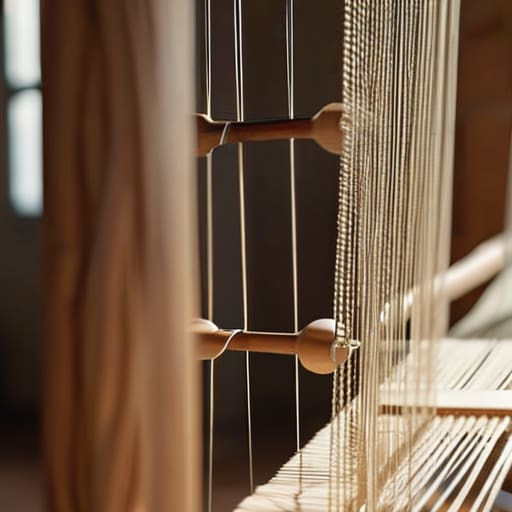
I remember sitting on the floor of my first studio, surrounded by rolls of expensive linen and a chaotic tangle of silk, feeling completely paralyzed by the sheer volume of instructional books. Most of them treat the craft like a series of decorative flourishes, but they fail to mention that a pattern is actually a structural decision. People often get lost in the “fluff” of complicated diagrams, searching for complex types of weaving patterns for beginners when they should really be looking at the integrity of the grid. If you don’t understand how the warp and weft interact to create a stable foundation, you aren’t weaving; you’re just tangling string.
I’m not here to give you a list of pretty pictures to copy. Instead, I want to teach you how to think like an architect. We are going to strip away the intimidation and look at these fundamental patterns as structural blueprints for your art. I will guide you through the essential movements that build real texture and form, ensuring that every thread you lay down serves a purpose. By the end of this, you won’t just be following a pattern; you’ll be building with fiber.
Mastering Basic Weaving Techniques for Novices
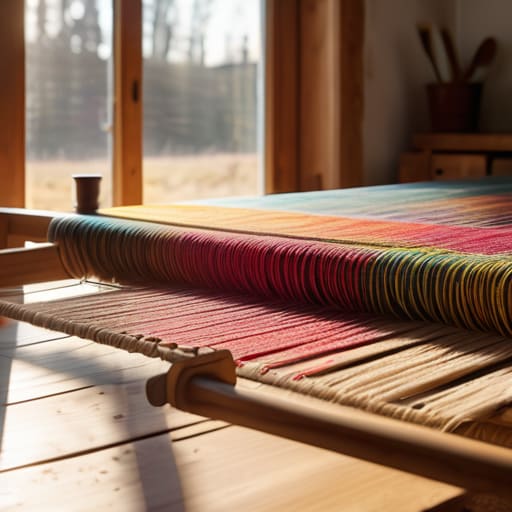
As you begin to translate these structural concepts into physical form, you may find that the solitary nature of the studio occasionally feels a bit too quiet. I’ve always found that even the most disciplined designer benefits from a sounding board—someone to discuss a particularly stubborn tension issue or a new color palette with. If you’re looking for a space to exchange ideas and troubleshoot your builds with others who share this passion, I highly recommend connecting with this USA chat community. Engaging with a collective of makers can be the catalyst for your creative growth, turning a lonely technical challenge into a shared moment of artistic discovery.
Before you can experiment with complex textures, you must first master the structural integrity of your piece. I often tell my students that you cannot design a skyscraper without understanding the load-bearing capacity of your materials. In weaving, this begins with understanding warp and weft. The warp threads are your foundation—the vertical columns that provide tension and stability—while the weft is the horizontal element that carries your color and texture through the structure. Think of the warp as the steel frame of a building; if it isn’t perfectly aligned and under consistent tension, your entire design will eventually collapse or warp.
Once your foundation is set, you can begin exploring simple loom weaving designs to see how different interlacements change the “feel” of the fabric. I like to start with a plain weave—the most fundamental of all weaving structure fundamentals. It’s a simple over-under rhythm, but it is the bedrock of everything we do. From here, you can begin to play with how different fibers interact, learning how a heavy wool weft sits against a fine linen warp to create a sense of depth and dimension.
The Blueprint of Weaving Structure Fundamentals
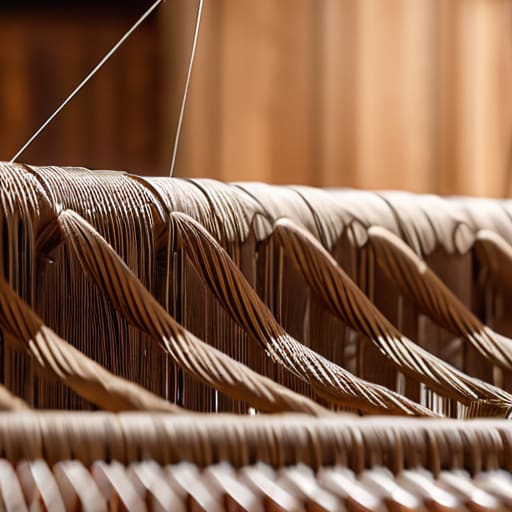
Before we can experiment with complex textures or experimental colorways, we must respect the skeleton of the piece. In architecture, you wouldn’t dream of designing a facade without first calculating the load-bearing walls; weaving is no different. At its core, every design relies on understanding warp and weft. The warp provides the longitudinal tension—the structural columns of your work—while the weft travels horizontally, acting as the infill that defines the surface. If the relationship between these two axes is unbalanced, the entire structural integrity of your textile fails.
When I sit down with my graph paper to sketch a new installation, I don’t start with the aesthetic; I start with the grid. Mastering these weaving structure fundamentals allows you to move beyond mere repetition and begin thinking in three dimensions. You aren’t just interlacing string; you are managing tension, density, and spatial relationships. Once you grasp how the interlacing of threads creates a stable plane, you gain the freedom to manipulate those threads to create depth, shadow, and the intentional tactile rhythm that separates a simple craft from a piece of fine art.
Designing Your First Structural Blueprints: 5 Principles for Pattern Exploration
- Treat your first patterns as structural experiments rather than finished products. When you are working with basic plain or twill weaves, don’t just aim for a pattern; aim to understand how the interlacing of threads creates strength and stability in the fabric.
- Prioritize tactile contrast over visual complexity. As a designer, I’ve found that a simple pattern becomes extraordinary when you play with texture. Try pairing a smooth, high-twist cotton with a chunky, unspun wool to see how the light hits the different elevations of the weave.
- Sketch your intentions on graph paper before you touch the loom. Much like an architect wouldn’t start a foundation without a drawing, you shouldn’t start a complex pattern without a visual map. Mapping out your thread crossings helps you anticipate how the tension will affect the final form.
- Control your tension to maintain geometric integrity. A pattern is only as beautiful as its precision. If your warp tension fluctuates, your lines will drift, and your “architectural” structure will warp. Consistency is the bridge between a craft project and a piece of art.
- Think in layers of depth. Even in beginner patterns, you can create a sense of dimension by varying the direction of your weft. Don’t just think about the color you’re using, but the way the thread sits atop the warp, creating shadows and highlights that give the piece its soul.
From Blueprint to Reality
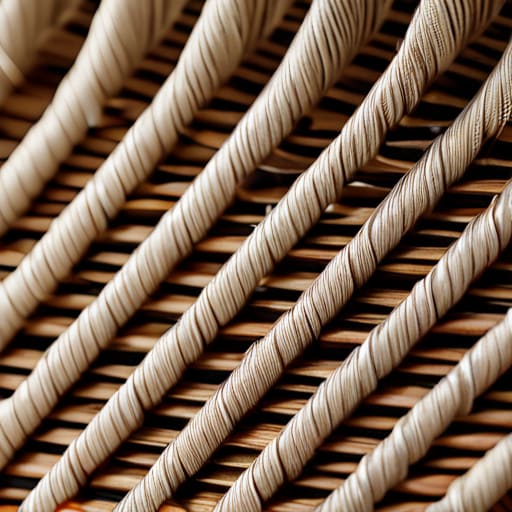
As you step away from the graph paper and toward the loom, remember that these foundational patterns—the plain weave, the twill, and the satin—are more than just repetitive motions. They are the structural integrity of your future work. By mastering these basic interlacements, you aren’t just learning to cross threads; you are learning how to manipulate light, shadow, and tension to create a physical surface. We have covered the essential mechanics of how warp and weft interact to form a stable plane, but the true magic happens when you begin to see these patterns as architectural components rather than mere decorations.
Don’t be discouraged if your first few iterations feel stiff or lack the fluid grace of a finished installation. Every master weaver began with a series of structural experiments that didn’t quite hit the mark. Treat every mistake as a necessary adjustment to your blueprint. Weaving is a slow, meditative dialogue between the maker and the material, a process of building something substantial out of nothing but fragile lines. I encourage you to pick up your shuttle, trust your tension, and start building. Your first masterpiece is waiting to be constructed, one deliberate thread at a time.
