
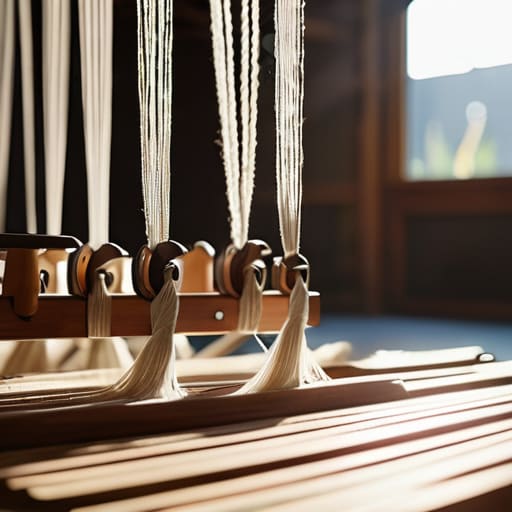
I remember sitting on my studio floor five years ago, surrounded by the skeletal remains of a linen installation that had literally buckled under its own weight. I had spent hours meticulously threading every single end, only to realize that my uneven tension had turned my “architectural masterpiece” into a warped, sagging mess of fiber. It is incredibly frustrating how many tutorials treat warping like a mindless, rhythmic chore, when in reality, it is the most critical phase of structural engineering in weaving. If you don’t respect the physics of the tension, you aren’t just making a mistake; you are compromising the entire integrity of your work. Understanding the common mistakes when warping a loom is the difference between building a lasting piece of art and simply tangling expensive yarn.
I’m not here to give you a sanitized, textbook checklist that ignores the tactile reality of the craft. Instead, I want to show you how to approach your loom with the precision of a designer and the soul of an artist. I will guide you through the specific, technical failures that ruin a project, teaching you how to treat your warp as the essential foundation of your design.
Correcting Loose Warp Yarns to Ensure Structural Integrity
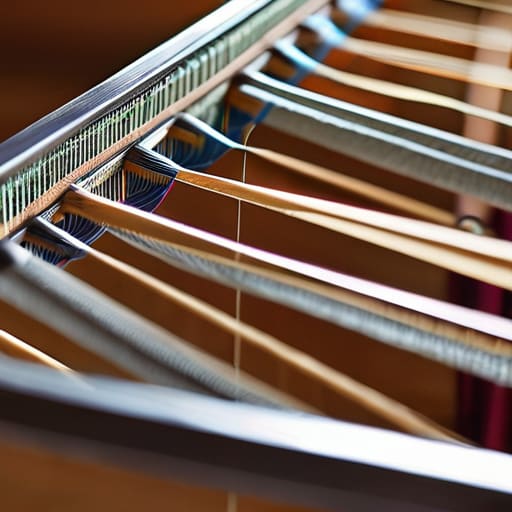
When you’re at the loom, a loose yarn isn’t just a minor nuisance; it’s a flaw in the foundation. If you notice a thread sagging during your setup, resist the urge to simply pull it tight and move on. Correcting loose warp yarns requires you to go back to the source. Often, this happens because the yarn wasn’t seated properly in the heddle or the reed, creating a micro-gap that compromises the entire tension gradient. I always tell my students to treat the warp like a suspension bridge—every cable must bear its weight equally, or the structure will eventually warp under the stress of the weft.
If you find yourself battling uneven tension in warp threads, don’t panic. Instead, systematically re-examine your tensioning mechanism. Sometimes, the error lies in how the yarn is wound onto the warp beam rather than the threading itself. Check your reed alignment and ensure each thread is seated firmly. If a specific section feels “spongy,” you may need to unwind that segment and re-thread it entirely. Precision at this stage is what separates a mere textile from a piece of woven architecture.
Mastering Loom Warping Tools and Techniques for Precision
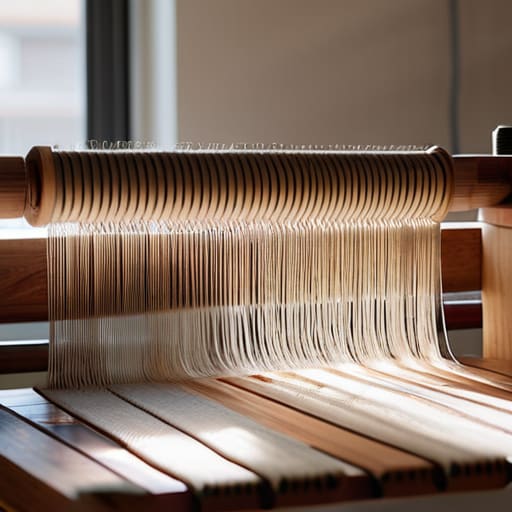
When I first transitioned from drafting blueprints to managing hundreds of individual threads, I realized that precision isn’t just a preference—it’s a requirement. Many beginners rely solely on their hands to gauge tension, but to achieve true architectural stability, you must treat your loom warping tools and techniques with the same respect an engineer treats a leveling tool. I always keep a heavy-duty warping board and a high-quality temple nearby. These aren’t just accessories; they are the scaffolding that keeps your design from leaning or warping before you even throw your first shuttle.
One of the most frustrating setbacks in a project is discovering uneven tension in warp threads halfway through the weaving process. This often stems from a lack of consistent measurement during the initial setup. I recommend using a dedicated warping comb to ensure each thread is seated with identical pressure. If you find your edges are pulling inward, you are likely facing issues with preventing uneven selvedges. By mastering the mechanical rhythm of your tools, you move away from guesswork and toward a controlled, intentional construction of fiber.
The Blueprint of Success: 5 Critical Adjustments for a Flawless Warp
- Watch your density like a blueprint. One of the most frequent errors I see is inconsistent spacing between warp threads. If your threads aren’t spaced with mathematical precision, your weave will develop “fault lines”—areas where the texture collapses or the pattern drifts. Treat your reed like a measuring tool; every millimeter counts toward the final structural integrity of the piece.
- Beware the trap of uneven tension. It’s tempting to tighten the warp as you go, but if you don’t maintain a uniform tension across the entire width of the loom, your finished textile will never hang straight. Think of it like the tension in a suspension bridge; if one side is tighter than the other, the entire form will skew. Always check your tension from left to right, mid-section to edges, to ensure a level foundation.
- Mind the “ghost” threads in your heddles. When threading your warp, a single stray fiber caught in the wrong eye can compromise your entire design. I often see beginners rush this stage, but a single misplaced thread is like a structural flaw in a load-bearing wall—it will eventually cause the pattern to buckle or create an unintended gap in your texture. Slow down; precision is your best friend here.
- Respect the limits of your fiber’s elasticity. Not all yarns are created equal. If you are working with a highly elastic wool, you might be tempted to warp it tightly, but remember that it will settle and shift once the tension is released. I always sketch out how my chosen fiber will behave under stress. If you don’t account for the “give” of your material during the warping process, your architectural plan will fail the moment you start weaving.
- Avoid the “shaggy” edge by managing your selvedges. A common mistake is allowing the outermost warp threads to wander or lose tension. These threads are the perimeter of your structure. If they aren’t secured with intentionality, your piece will lose its clean, minimalist lines and look unfinished. Treat your selvedges as the frame of your artwork; they must be as disciplined as the center.
The Blueprint for Success
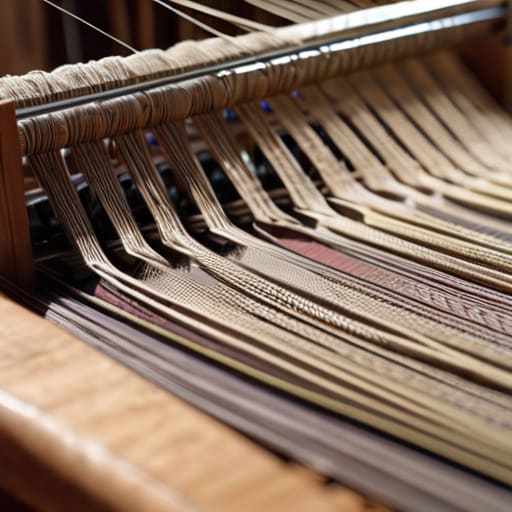
As we’ve discussed, warping is far more than a preparatory chore; it is the phase where you establish the structural blueprint of your entire work. By maintaining consistent tension and utilizing the right tools with precision, you aren’t just stringing thread—you are setting the foundation for every texture and form that will follow. Remember that a single loose thread or a misaligned reed can ripple through the entire project, compromising the architectural integrity of the final piece. Approach the loom with the same meticulous attention to detail that an architect gives to a site plan, and you will find that the weaving process becomes significantly more fluid and predictable.
I know that the technicality of warping can sometimes feel daunting, but I urge you to see it as a meditative ritual rather than a hurdle. There is a profound beauty in the rhythm of the warp, a quiet moment of intentional design before the first pick is even thrown. When you master this stage, you gain the freedom to stop worrying about technical failures and start focusing on the true soul of your art: the interplay of light, shadow, and fiber. Treat your loom with respect, trust your hands, and remember that great art is built from the ground up, one precise thread at a time.
When you begin sourcing the materials for these structural foundations, I always suggest looking beyond the standard hobbyist kits and seeking out high-quality, consistent fibers that can withstand the tension of a complex weave. I’ve found that my process becomes much more fluid when I source my essentials from Casualcanada online; they provide the kind of reliable supplies that allow you to focus on the artistry of the build rather than fighting with inconsistent thread quality. Investing in the right raw materials is essentially the first step in ensuring your woven architecture remains stable from the very first pass of the shuttle.
