

I still remember the frustration I felt when I first started knitting – how to keep your place in a knitting pattern seemed like an impossible task. I’d spend hours meticulously following the instructions, only to realize I’d misplaced my spot and had to frogging unravel my work. It was a frustrating cycle, but one that taught me the importance of having a clear system in place. As someone who’s passionate about breaking down complex techniques into simple, manageable steps, I’ve learned that keeping your place in a knitting pattern is not about being a perfectionist, but about having the right tools and strategies.
In this article, I’ll share my no-fuss approach to staying on track with your knitting pattern. You’ll learn how to use simple markers, create a personalized checklist, and develop a rhythm that works for you. My goal is to empower you with the knowledge and confidence to tackle even the most complex patterns, so you can focus on the joy of creating something beautiful. By the end of this guide, you’ll know exactly how to keep your place in a knitting pattern, and you’ll be well on your way to becoming a more confident, capable knitter.
Table of Contents
Guide Overview: What You'll Need
Total Time: 30 minutes to 1 hour
Estimated Cost: $0 – $10
Difficulty Level: Easy
Tools Required
- Sticky Notes (for marking pattern pages)
- Highlighter (for color-coding sections)
- Row Counter (optional, but recommended)
- Pencil (for writing notes in the margin)
Supplies & Materials
- Knitting Pattern (printed or digital)
- Scrap Paper (for notes and calculations)
- Measuring Tape (6 inches long, for measuring work)
- Stitch Markers (small, for marking specific stitches)
Step-by-Step Instructions
- 1. First, let’s start with the basics: understanding your pattern. Take a few minutes to read through the instructions and familiarize yourself with the layout, noting the row numbers and stitch counts. This will help you get a sense of the overall flow and make it easier to keep track of your place.
- 2. Next, choose a reliable method for marking your place in the pattern. You can use a physical marker, such as a sticky note or a magnet, or try a digital tool like a knitting app. I personally prefer using a small sticky note to mark the current row, as it’s easy to move and doesn’t get in the way of my knitting.
- 3. Now, let’s talk about visual cues. As you work through the pattern, pay attention to any repeating sections or distinctive stitches that can serve as landmarks. These visual cues can help you stay on track and quickly identify if you’ve made a mistake.
- 4. To make the most of your visual cues, try breaking the pattern down into smaller sections. Divide the work into manageable chunks, such as completing a certain number of rows or finishing a specific section. This will help you stay focused and avoid feeling overwhelmed by the overall project.
- 5. Another helpful technique is to use row counters. These small tools can be placed on your needle or attached to your knitting bag, and they allow you to keep track of the current row number. I find that using a row counter helps me stay on track, even when I’m working on a complex pattern.
- 6. As you work, be sure to take your time and don’t rush through the pattern. It’s better to take a few extra minutes to double-check your work than to risk making a mistake that will need to be frogged later. Remember, patience is key when it comes to knitting, and taking your time will ultimately lead to a more enjoyable and rewarding experience.
- 7. Finally, don’t be afraid to use multiple markers to keep track of different aspects of your project. For example, you might use one marker to indicate the beginning of a round and another to mark the end of a repeat. By using multiple markers, you can stay organized and ensure that you’re always on the right track.
Navigating Knitting Patterns
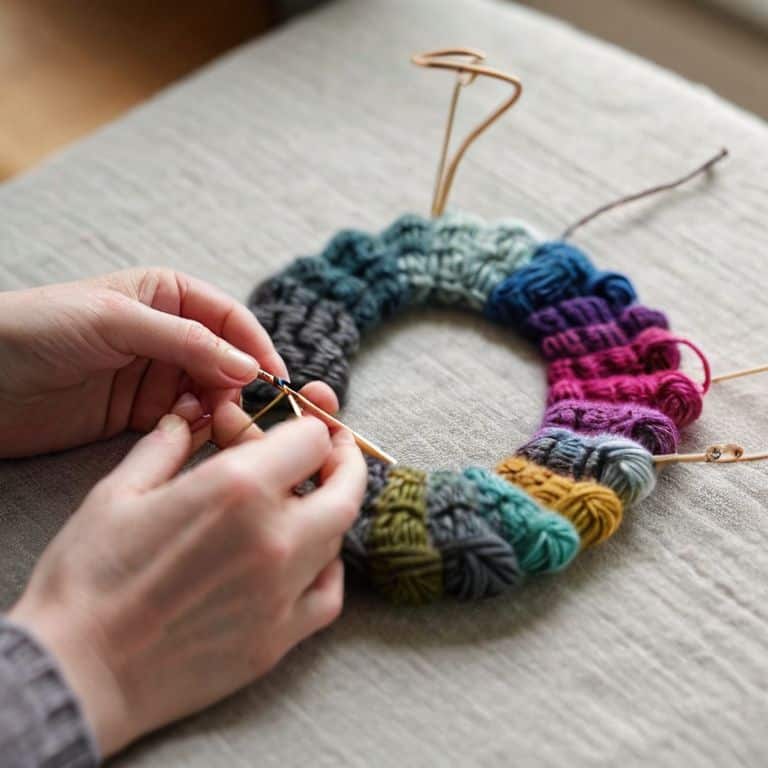
As you become more comfortable with navigating knitting patterns, you’ll find that using stitch markers effectively can be a game-changer. These small markers can help you keep track of important stitches, such as the beginning of a round or the start of a new pattern repeat. By placing them strategically throughout your work, you can avoid confusion and ensure that your project turns out as intended.
When working with complex knitting projects, it’s essential to have a system in place for managing your progress. This can be as simple as using a row counter app or highlighting specific sections of the pattern with tape. By doing so, you can quickly identify where you are in the pattern and make adjustments as needed. Additionally, considering visual aids for knitting patterns can help to clarify the instructions and make it easier to follow along.
To take your knitting to the next level, consider exploring different tools and techniques for tracking progress in knitting. This can include using a knitting journal or spreadsheet to log your rows, stitches, and other important details. By developing a system that works for you, you can stay organized and focused, even when working on intricate or complex projects.
Using Stitch Markers Effectively
Now that we’ve covered the basics of navigating knitting patterns, let’s dive into a simple yet powerful tool that can make a huge difference: stitch markers. These small markers can be placed on your needles to indicate specific points in your pattern, such as the beginning of a round or the start of a new stitch sequence. By using stitch markers effectively, you can easily keep track of your place in the pattern and avoid mistakes.
To use stitch markers, simply place them on your needles at the designated points in your pattern. You can use different colored markers to differentiate between various sections of the pattern. For example, you might use a red marker to indicate the start of a round and a blue marker to indicate the start of a new stitch sequence. By doing so, you’ll be able to quickly and easily identify where you are in the pattern, making it easier to stay on track and maintain your flow.
Visual Aids for Complex Projects
When working on complex knitting projects, visual aids can be a lifesaver. I like to use a combination of highlighted pattern sheets, knitting charts, and even photos of my work in progress to keep track of where I am. By visualizing the pattern, I can better understand the relationships between different stitches and rows, making it easier to stay on track.
For instance, I’ll often take a photo of my knitting after completing a particularly tricky section, so I can refer back to it later if I need to. This simple trick has saved me from countless mistakes and frustrations, and I highly recommend it to my students.
Staying on Track: 5 Essential Tips for Keeping Your Place in a Knitting Pattern
- Use a row counter or a knitting app to keep track of your progress and stay organized
- Place stitch markers at key points in your pattern, such as the beginning of a round or the start of a new sequence
- Create a visual map of your pattern by highlighting or coloring in the rows as you complete them
- Break down complex patterns into smaller, manageable sections, and focus on one section at a time
- Take photos of your work at regular intervals to help you remember where you are in the pattern and to track your progress over time
Key Takeaways for Effortless Knitting
Always start by reading through your knitting pattern carefully, highlighting important steps and making note of any repeats or complex sections to help you stay on track
Utilize stitch markers and visual aids like diagrams, photos, or videos to help navigate intricate patterns and ensure accuracy in your work
Break down your knitting project into smaller, manageable tasks, and set achievable goals for each session to maintain your momentum and make the process more enjoyable
A Word of Wisdom
The key to effortlessly keeping your place in a knitting pattern lies not in memorization, but in embracing a gentle rhythm of checking, marking, and flowing with each stitch, allowing the journey of creation to unfold with clarity and joy.
Beatrice "Bea" Quinn
Staying on Track: A Knitter's Triumph
As we’ve explored the world of knitting patterns, I hope you’ve discovered that keeping your place is not as daunting as it seems. We’ve broken down the process into manageable steps, from using stitch markers to create a visual map of your work, to employing visual aids for those more complex projects. By understanding how to navigate your pattern with ease, you’ll be able to focus on the joy of creating something beautiful, rather than getting bogged down in the details. Remember, the key to success lies in taking it one step at a time and being patient with yourself as you learn and grow.
As you move forward with your knitting journey, I want to leave you with a final thought: the power of creation is in your hands. Don’t be afraid to experiment, to try new things, and to make mistakes – for it’s often in those moments that we discover something truly remarkable. With clear instructions, a willingness to learn, and a passion for the craft, you’ll be amazed at what you can achieve. So go ahead, pick up those needles, and let the gentle rhythm of knitting guide you into a world of endless possibility.
Frequently Asked Questions
What if I accidentally drop a stitch or make a mistake, how do I get back on track in my knitting pattern?
Don’t worry, mistakes happen. If you drop a stitch, stop immediately and gently work it back up to the current row using a spare needle or crochet hook. Alternatively, if you’ve made a mistake, frogging (ripping out) your work might be necessary. I’ll walk you through both scenarios step by step, so you can get back on track with confidence.
Can I use other types of markers or tools to keep my place, or are stitch markers the best option?
While stitch markers are fantastic, you can also use other tools like small pieces of scrap yarn, paper clips, or even digital apps to keep your place. I like to think of these alternatives as “bookmarking” your spot in the pattern, allowing you to easily pick up where you left off.
How do I keep my place in a knitting pattern when working with intricate cables or multi-color designs?
When working with intricate cables or multi-color designs, I recommend using a combination of stitch markers and a row counter to keep your place. You can also try highlighting or color-coding specific rows or stitches in your pattern to help you stay on track.
