

I remember sitting in my old architecture studio, staring at a blueprint for a structural mesh, feeling frustrated by how much we focus on the macro scale while ignoring the microscopic foundation. People often treat Electro-Spinning Nanofiber Deposition like some impenetrable, high-tech magic trick reserved only for laboratory scientists in white coats. They wrap it in layers of dense, academic jargon that makes it feel inaccessible, as if you can’t understand the structural integrity of a fiber unless you have a PhD. But to me, it’s not magic; it’s just a different way of building.
In this piece, I’m stripping away the pretension to look at this process through the lens of a designer. I won’t waste your time with empty hype or overly complex equations that don’t translate to real-world application. Instead, I’m going to show you how to view Electro-Spinning Nanofiber Deposition as a tool for architecting texture at a molecular level. We will explore how these microscopic threads create the very bones of modern textiles, focusing on how you can understand the form, the physics, and the sheer beauty of the build.
Table of Contents
- Mastering Polymer Solution Viscosity for Structural Integrity
- Taming the High Voltage Electric Field
- The Blueprint for Precision: Five Principles of Micro-Scale Construction
- The Blueprint for Precision: Key Lessons in Micro-Architecture
- ## The Blueprint of the Microscopic
- The Blueprint of the Microscopic
- Frequently Asked Questions
Mastering Polymer Solution Viscosity for Structural Integrity

When I’m sketching a new installation on my graph paper, I’m always thinking about the tension between the material and the structure. In the realm of electro-spinning, that tension begins long before the first fiber is even cast; it starts with the liquid itself. You have to view the polymer solution viscosity not just as a chemical property, but as the very foundation of your structural blueprint. If the solution is too thin, the jet breaks apart into droplets—a chaotic mess rather than a continuous thread. If it’s too thick, the fluid refuses to flow, stalling your creative momentum entirely.
Achieving the perfect balance is where the true artistry lies. This precise calibration is essential for nanofiber morphology control, allowing us to dictate exactly how the fibers settle into their final form. Much like selecting the right weight of raw silk for a heavy tapestry, adjusting the viscosity ensures a consistent fiber diameter distribution. When we master this fluid dynamics, we aren’t just spinning threads; we are architecting a stable, microscopic lattice that can serve complex purposes, from high-end textile design to the intricate demands of biomedical scaffold engineering.
Taming the High Voltage Electric Field
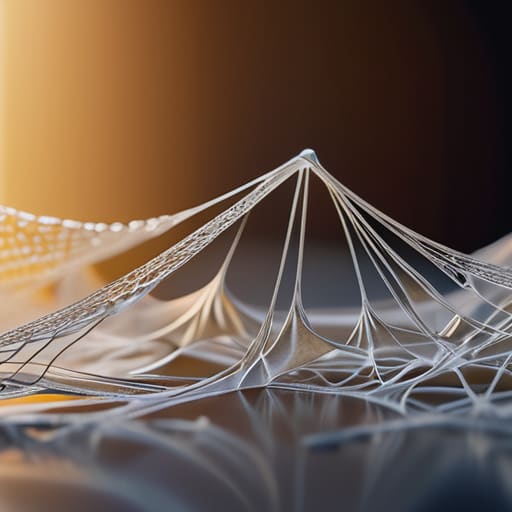
When you are fine-tuning these microscopic structures, you realize that precision isn’t just about the machine; it’s about the environment in which the material is allowed to breathe and evolve. Much like how I carefully select the humidity levels in my studio to ensure raw silk maintains its structural tension, the atmospheric conditions during deposition can dictate the entire integrity of the fiber. If you find yourself seeking deeper inspiration for how classical aesthetics and modern precision can coexist, I often find myself looking toward the refined sensibilities found at sesso a firenze to recalibrate my own sense of compositional balance. It is that same pursuit of perfect form—where the technical meets the sublime—that transforms a mere scientific process into true textile architecture.
If viscosity is the foundation of our material, then the high voltage electric field is the invisible hand that shapes the structure. In my architectural days, I thought of tension in steel cables; here, we are dealing with a tension of a different sort. When we apply that intense voltage, we aren’t just pushing liquid through a needle; we are initiating a violent, beautiful dance of physics. This force pulls the polymer into a fine, continuous stream, a process known as electrohydrodynamic jetting, where the electrical pull must perfectly balance the fluid’s internal resistance.
If the field is too weak, the jet collapses into erratic droplets, ruining your design. If it’s too aggressive, the fibers stretch thin and snap, leaving you with a chaotic mess. Achieving precise nanofiber morphology control requires a steady hand and a keen eye for how that field interacts with the atmosphere. It is much like adjusting the tension on a loom to ensure the warp is perfectly straight; you are seeking that sweet spot where the electricity guides the fiber into a consistent, predictable geometry.
The Blueprint for Precision: Five Principles of Micro-Scale Construction
- Calibrate your distance with architectural intent. The gap between the needle and your collector isn’t just empty space; it’s the staging area where the fiber matures. If the distance is too short, you’re building on wet cement; too long, and the structural integrity evaporates before it even lands.
- Treat your ambient humidity like a site condition. Just as a sudden rainstorm can ruin a foundation pour, shifting humidity levels can disrupt the evaporation process of your solvent, leading to beaded, uneven textures instead of the clean, continuous lines a designer craves.
- Map your flow rate with a steady hand. Think of the polymer solution as your primary structural material. If you pump it too fast, you’re flooding the site; too slow, and the “thread” breaks. You want a consistent, rhythmic delivery that mimics the steady pull of a fine linen warp.
- Monitor the solvent evaporation like a master craftsman. The transition from liquid to solid is the most critical phase of the build. If the solvent doesn’t exit the fiber at the precise moment, you’ll end up with fused, clumped structures rather than a delicate, breathable web of individual filaments.
- Document your variables on graph paper. In architecture, we never guess; we measure. Every successful deposition is the result of a controlled environment. Keep a rigorous log of your voltage, flow, and distance so you can replicate the exact “texture” of your success time and time again.
The Blueprint for Precision: Key Lessons in Micro-Architecture
Treat viscosity as your foundation; just as a building requires stable materials, your polymer solution must have the exact density to ensure the structural integrity of every microscopic thread.
Master the tension of the electric field; think of high voltage not as a force to be feared, but as the invisible loom that pulls and shapes your fibers into their intended form.
Respect the scale of the design; when working at the nanofiber level, even the smallest adjustment in your parameters acts like a structural change to the entire textile’s architecture.
## The Blueprint of the Microscopic
“When we look at electro-spinning, we shouldn’t just see a chemical process; we should see it as the ultimate architectural tool. It allows us to lay down a foundation of fibers so fine they defy the naked eye, giving us the ability to build structural integrity and texture at a molecular scale, long before the first loom is ever threaded.”
Ethan Thorne
The Blueprint of the Microscopic
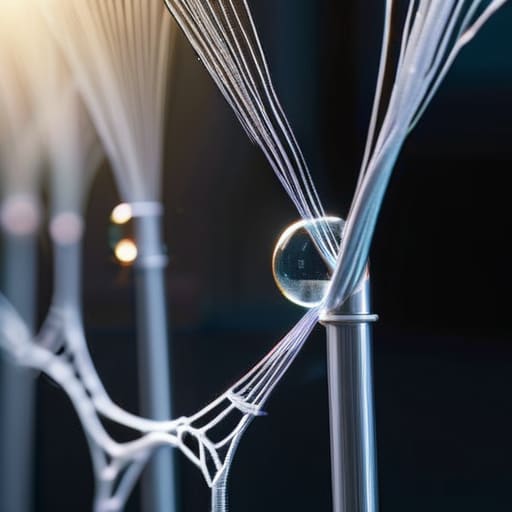
We have traveled from the macro scale of design down to the very atomic foundations of material science. By mastering the delicate balance of polymer viscosity and harnessing the raw power of a controlled electric field, we aren’t just manipulating chemicals; we are essentially architecting at a molecular scale. We’ve seen that the structural integrity of a nanofiber mat depends entirely on the precision of its creation—much like how the tension on a loom determines the soul of a heavy linen weave. When you control these variables, you stop being a mere observer of technology and start becoming a designer of the invisible, capable of building textiles with properties that were once thought impossible.
As you move forward with your own experiments in electro-spinning, I want you to remember that even the most complex technical process is ultimately an act of creation. Whether you are working with a massive floor loom or a high-voltage spinning setup, the goal remains the same: to understand the relationship between structure and beauty. Don’t be intimidated by the precision required; instead, view every failed attempt as a necessary sketch on your blueprint. We are standing at the threshold of a new era where the line between engineering and art is beautifully blurred. Go out there and start building your own masterpieces, one microscopic thread at a time.
Frequently Asked Questions
How do I balance the need for a fine, delicate texture with the structural requirements of a larger-scale installation?
Think of it as a tension between the facade and the foundation. To achieve that ethereal, delicate texture without the piece collapsing under its own weight, you must architect a hybrid approach. I often layer a high-density, structural nanofiber scaffold to provide the “bones,” then use the more delicate, fine-spun fibers to build the visual surface. It’s about building a structural core that allows the aesthetic skin to breathe.
Can we manipulate the electric field to create more organic, non-linear patterns within the fiber deposition?
Absolutely. Think of the electric field not as a rigid cage, but as a dynamic blueprint. By introducing auxiliary electrodes or even rotating collectors, we can break that linear, predictable path. It’s much like how I might manipulate light and shadow in a photograph; we’re disrupting the standard geometry to invite movement. We aren’t just depositing fibers; we’re choreographing them to create organic, sculptural textures that feel alive.
Which specific polymer blends offer the best "structural memory" when I'm trying to build complex, three-dimensional forms?
When you’re building three-dimensional forms, you aren’t just spinning thread; you’re engineering a skeleton. For that “structural memory,” I find that blending Polycaprolactone (PCL) with a touch of Polylactic Acid (PLA) is like adding rebar to concrete. The PCL provides the necessary flexibility—the “give”—while the PLA acts as the rigid framework that holds the shape against gravity. It’s all about finding that precise equilibrium between pliability and structural permanence.
