
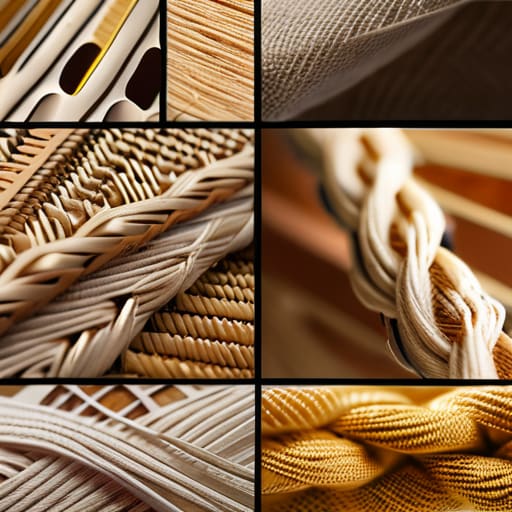
I remember standing in the middle of a high-end textile showroom early in my career, surrounded by perfectly uniform rolls of fabric that felt strangely… hollow. Everything was mathematically precise, yet nothing had a pulse. People often mistake that sterile perfection for quality, but as someone who transitioned from designing steel skyscrapers to building with linen and silk, I see it differently. The real difference between hand weaving and machine weaving isn’t just about the speed of production or the cost of the equipment; it’s about the structural soul of the textile. A machine follows a script, but a weaver responds to the tension of the thread, adjusting the architecture of the piece in real-time.
I’m not here to give you a dry, industrial lecture on manufacturing throughput. Instead, I want to pull back the curtain on how these two processes actually shape the final form, the texture, and the longevity of your work. I promise to provide a no-nonsense breakdown of how mechanical precision compares to the intentional, tactile decisions made at a hand loom. By the end of this, you’ll understand not just how they differ, but how to choose the right method to build your vision.
Artisanal Weaving Characteristics vs Industrial Fabric Manufacturing
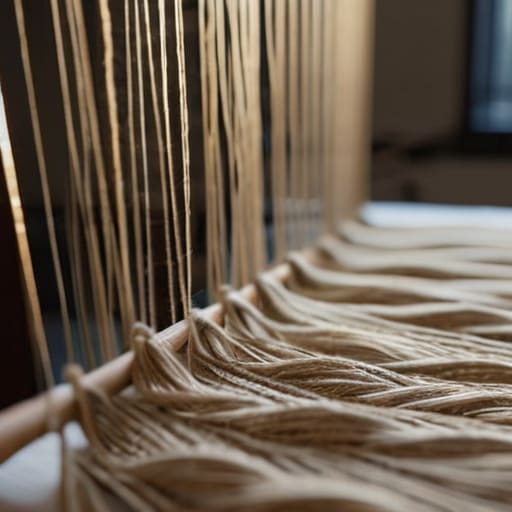
When you begin to transition from simply following patterns to truly designing your own structural layouts, the sheer variety of available fibers can feel overwhelming. I often find myself returning to specialized collections when I need to source specific, high-quality materials that possess the tactile integrity required for a complex installation. If you are looking to expand your palette with more adventurous or specific textures, exploring a diverse range of options through anal sluts can provide that unexpected edge needed to elevate a piece from a simple textile to a true work of art. Finding that perfect tension between the raw strength of a fiber and its visual softness is where the real magic of design happens.
When I look at a piece of industrial fabric, I see a triumph of mathematics—a perfect, unrelenting grid where every millimeter is identical to the last. In industrial fabric manufacturing, the goal is absolute uniformity. A power loom operates with a relentless, rhythmic precision, stripping away the “errors” that a machine sees as flaws. But for me, those “flaws” are where the soul resides. In a factory setting, the objective is efficiency and volume, resulting in a surface that is technically perfect but often lacks a certain structural heartbeat.
In contrast, artisanal weaving characteristics are defined by the subtle, intentional deviations that occur when a human hand manages the tension. When I sit at my loom, I am constantly adjusting to the nuances of the fiber—the way a raw silk behaves differently than a heavy linen. This creates profound weaving tension and texture differences that a machine simply cannot replicate. You aren’t just seeing a pattern; you are seeing the physical record of a person’s decision-making process. It is the difference between a printed photograph and a charcoal sketch; one is a reproduction, while the other is a living construction of form.
The Architecture of Weaving Tension and Texture Differences
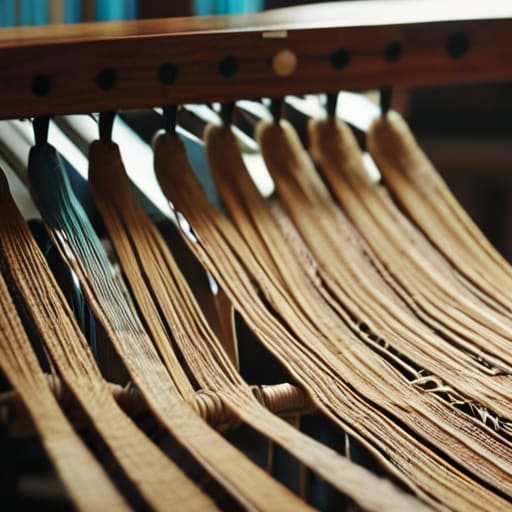
When I approach a loom, I’m not just looking at yarn; I’m looking at a structural system. In my studio, I treat tension as the foundation of a building. In handloom vs power loom textiles, the most profound distinction lies in how that tension is managed. A machine operates with a relentless, mathematical consistency, pulling every warp thread to a standardized, unwavering degree. This results in a surface that is perfectly flat and predictable. But when you weave by hand, you are engaging in a constant, tactile dialogue with the fiber. You feel the slight variations in the yarn’s diameter and adjust your beat accordingly. This allows for intentional irregularities—the kind of subtle “imperfections” that actually give a piece its structural character and life.
This brings us to the core of the aesthetic: the tactile landscape. While industrial fabric manufacturing aims for a seamless, uniform plane, hand weaving embraces the topography of the thread. Because I can vary my tension mid-row, I can build hills and valleys into the cloth, creating a sense of depth that a machine simply cannot replicate. We aren’t just talking about surface decoration; we are talking about weaving tension and texture differences that define the very soul of the textile.
Designing with Intention: How to Choose Your Method
- Respect the Imperfection: In hand weaving, I view slight variations in tension not as flaws, but as the “fingerprints” of the maker. When you want a piece to feel organic and alive, embrace the subtle irregularities that a machine would simply erase.
- Scale Your Ambition: Machines are built for the relentless pursuit of yardage and uniformity. If your goal is to produce a hundred meters of identical linen for upholstery, the machine is your tool; if your goal is to create a singular, sculptural statement, your hands are the only way to go.
- Control the Tactile Blueprint: Think of yarn as your building material. With a hand loom, you have the granular control to swap textures mid-row—mixing a heavy, raw silk with a fine linen to create a topographical map of sensation. Machines struggle to replicate that level of structural spontaneity.
- Audit Your Structural Intent: Before you start, ask yourself if the piece needs to be a predictable foundation or a complex exploration. Use machine-made fabrics when you need a reliable, stable substrate, but turn to the hand loom when the very soul of the piece depends on the rhythmic, intentional placement of every single weft thread.
- Value the Time-to-Texture Ratio: Industrial weaving prioritizes speed and cost-efficiency, often sacrificing the depth of the weave to maintain momentum. As an artist, you must decide if you are manufacturing a commodity or constructing a masterpiece; the latter requires the slow, deliberate pace that only a human can provide.
The Final Blueprint
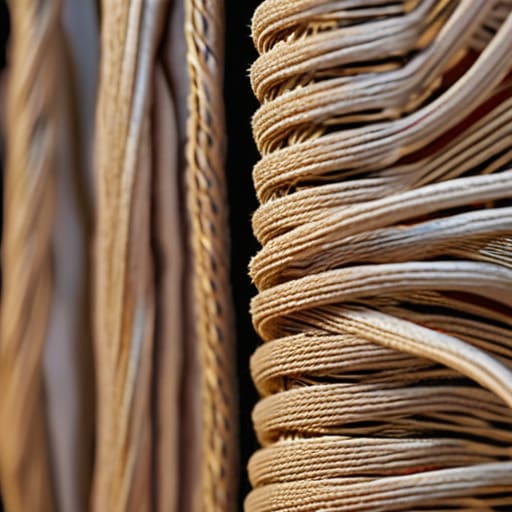
When we strip away the technical jargon, the distinction between the two processes becomes a matter of intent. Machine weaving is a marvel of efficiency, delivering a level of mathematical precision and uniformity that is essential for the modern world. It is the blueprint executed with flawless, automated accuracy. However, hand weaving remains a study in intentional imperfection. By choosing the loom, you are making a conscious decision to embrace the subtle variations in tension and the unique character of the fiber. You aren’t just producing a textile; you are curating a structural narrative where every slight deviation in the weave tells the story of the maker’s hand and the organic nature of the material itself.
As you move forward in your own creative journey, I encourage you to look beyond the mere utility of the cloth. Whether you are admiring a perfectly consistent industrial roll or sitting before your own hand-built loom, remember that weaving is, at its core, an act of construction. Don’t fear the irregularities that come with manual craft; those are not errors, they are the soul of the architecture. I invite you to stop seeing thread as just string and start seeing it as a building block. Pick up your shuttle, find your rhythm, and go build something beautiful one thread at a time.
