
As I sit here surrounded by balls of yarn and half-finished projects, I’m reminded of the age-old question that plagues many a knitter: how to calculate yardage for a knitting pattern. It’s a conundrum that can make even the most experienced among us scratch our heads. I recall a particularly frustrating incident where I underestimated the yardage for a beautiful lace shawl, only to run out of yarn midway through. It was a hard lesson learned, but one that taught me the importance of getting it just right.
In this article, I’ll share my personal approach to calculating yardage, one that’s rooted in simplicity and practicality. You’ll learn how to ditch the guesswork and arrive at a accurate estimate, every time. I’ll walk you through my favorite methods, including measuring your swatch and using online calculators. By the end of this guide, you’ll be equipped with the knowledge to confidently tackle any knitting project, knowing exactly how to calculate yardage for a knitting pattern that will leave you with a beautiful, finished piece, and no leftover yarn woes.
Table of Contents
Guide Overview: What You'll Need
Total Time: 30 minutes to 1 hour
Estimated Cost: free – $10
Difficulty Level: Easy
Tools Required
- Calculator (or spreadsheet software)
- Measuring Tape (for measuring gauge swatch)
- Ruler (for measuring inches or centimeters)
Supplies & Materials
- Knitting Pattern (with specific measurements and requirements)
- Yarn (for gauge swatch)
- Knitting Needles (in various sizes)
Step-by-Step Instructions
- 1. First, let’s start by understanding that calculating yardage for a knitting pattern requires some basic information about the project we want to make. We need to know the type of yarn we’re using, the size of the garment, and the density of the stitch pattern. This information will be our foundation for determining how much yarn we’ll need.
- 2. Next, we need to look at the yarn label and find the yardage per skein. This is usually listed in meters or yards, and it tells us how much yarn is in each skein. Make a note of this number, as we’ll be using it to calculate the total yardage needed for our project.
- 3. Now, let’s talk about the swatch. Yes, I know, swatching can seem like a tedious step, but trust me, it’s essential for getting an accurate calculation. Knit a swatch using the yarn and stitch pattern you’ve chosen, and then measure its gauge. Gauge is the number of stitches and rows per inch, and it will help us determine how much yarn our project will use.
- 4. With our gauge in hand, we can start calculating the yardage needed for our project. We’ll need to measure the circumference of the garment, as well as its length. For example, if we’re making a sweater, we’ll need to measure around the chest and the length from the shoulder down to the hem.
- 5. Now it’s time to do some math. We’ll use a formula to calculate the total yardage needed, but don’t worry, it’s not as scary as it sounds. The formula is: (stitches per inch x inches in circumference) / (yards per skein) = total skeins needed. We can plug in our numbers and calculate the total yardage required for our project.
- 6. Once we have our total yardage, we need to add a little extra for seams and edges. This will ensure that we have enough yarn to complete our project without running out. A good rule of thumb is to add 10-20% to our total yardage to account for these extras.
- 7. Finally, let’s round up to the nearest skein. We can’t buy a fraction of a skein, so it’s always better to have a little extra yarn on hand. This will also give us some flexibility in case our gauge is off or we need to make any adjustments to our project as we go along.
- 8. As a final check, let’s review our calculations to make sure we haven’t missed anything. Double-check our math, make sure we’ve accounted for all the factors that will affect our yarn usage, and we’re ready to start knitting our project with confidence.
Weaving Yardage Magic
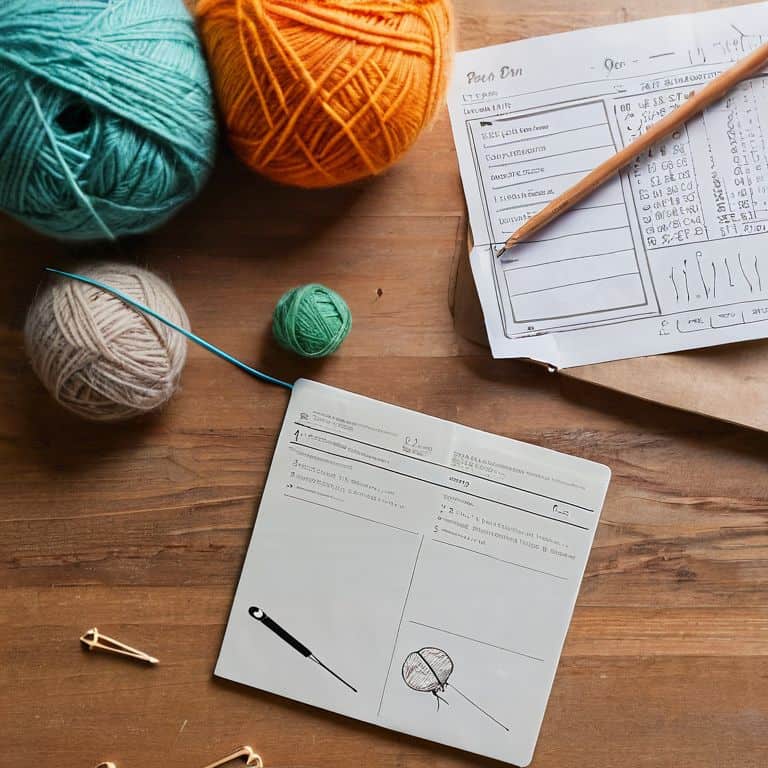
As we delve into the world of yarn and needles, it’s essential to remember that accurate measurements are key to a successful project. When estimating yarn for hats or scarves, I like to use a knitting yardage calculator to get a precise idea of how much yarn I’ll need. This handy tool takes into account the type of yarn, the weight, and the complexity of the pattern, giving me a reliable estimate of the yarn requirements.
When working with different yarn weights, it’s crucial to have a yarn weight conversion chart handy. This helps me to ensure that I’m using the right amount of yarn for my project, whether I’m making a sweater or a simple hat. By understanding the nuances of yarn weight and fiber content, I can create beautiful, long-lasting pieces that will keep their shape and softness over time.
As I work on my latest knitting project, I find myself lost in the gentle rhythm of the needles clicking away. It’s a meditative process, one that requires patience and attention to detail. To make the most of my knitting time, I like to use a knitting pattern measurement guide to double-check my calculations and ensure that my project turns out just as I envisioned it. With these tools and a little practice, you’ll be well on your way to mastering the art of yarn estimation.
Estimating With a Knitting Yardage Calculator
Now that we’ve unraveled the yarn requirements, let’s talk about one of my favorite tools – the knitting yardage calculator. I just love how it simplifies the process of estimating how much yarn we’ll need for a project. With a calculator, we can quickly plug in the details of our pattern, such as the type of yarn, needle size, and garment type, to get an accurate estimate of the yardage required.
I find that using a yardage calculator saves me so much time and reduces the risk of running out of yarn mid-project. It’s also a great way to experiment with different yarns and colors, allowing us to see how they’ll affect the overall yardage needs. By using a calculator, we can ensure that our project turns out just as we imagined, without any surprises along the way.
Unraveling Yarn Requirements
As we delve deeper into the world of yarn, it’s essential to understand the nuances of different fibers and their requirements. For instance, a lace shawl made from merino wool will demand a different approach than a chunky sweater crafted from bulky yarn. I like to think of yarn requirements as a recipe – you need the right ingredients in the right quantities to create something truly special. By considering the fiber content, weight, and texture of your yarn, you’ll be able to make informed decisions about your project and ensure that it turns out exactly as you envisioned.
When I’m working on a new design, I love to experiment with different yarns to see how they interact with the pattern. It’s amazing how a simple switch from one yarn to another can completely transform the look and feel of a piece. By unraveling the mystery of yarn requirements, you’ll unlock a world of creative possibilities and be able to bring your most imaginative projects to life.
Yardage Wisdom: 5 Essential Tips to Get You Started
- Consider the yarn weight and fiber content, as they significantly impact the overall yardage required for your project
- Swatch, swatch, swatch – it’s the best way to get an accurate estimate of how much yarn you’ll need, and it’s also a great opportunity to get a feel for the yarn and needles
- Take into account the complexity of the pattern, as more intricate designs often require more yarn due to the increased number of stitches and rows
- Think about the desired density and drape of your finished project – if you want it to be loose and flowy, you may need more yarn than if you prefer a tighter, more structured fit
- Don’t forget to leave a little extra yardage for weaving in ends and seaming, as it’s always better to have a bit of extra yarn on hand, rather than not enough
Key Takeaways for Calculating Yardage
Always consider the fiber content and weight of your yarn when estimating yardage, as these factors can greatly impact the overall yardage required for your project
Use a combination of measuring your gauge, estimating with a knitting yardage calculator, and referencing the yarn label to get an accurate calculation of the yardage you’ll need
Remember, calculating yardage is an art that requires patience and flexibility – don’t be afraid to adjust your calculations as you work on your project and use your best judgment to ensure you have enough yarn to complete it
The Heart of Yardage Calculation
As we measure and calculate, remember that yardage is not just a number, but a promise of the warmth and love that will be woven into every stitch.
Clara Meadows
Wrapping Up with Wisdom
As we’ve explored the world of calculating yardage for knitting patterns, I hope you’ve discovered that it’s not just about numbers and formulas, but about understanding your yarn and the project you’re about to embark on. We’ve covered the basics of yardage calculation, delved into the magic of weaving yardage, and even touched upon the convenience of using a knitting yardage calculator. By now, you should feel more confident in your ability to estimate the right amount of yarn for your next knitting adventure, whether you’re a seasoned pro or just starting out.
So, as you put down your calculator and pick up your knitting needles, remember that the true beauty of knitting lies not just in the finished product, but in the journey of creation. With every stitch, you’re not just making something with your hands, you’re crafting a story, a piece of yourself that you can share with others. Happy knitting, and I look forward to seeing the beautiful things you create!
Frequently Asked Questions
What if I'm using a yarn with an unusual fiber blend – how will that affect my yardage calculations?
Don’t worry, my friend! Unusual fiber blends can be a bit tricky, but I’ve got you covered. When working with unique yarns, it’s best to swatch and measure the yardage yourself, rather than relying on estimates. This will give you a more accurate idea of how the yarn will behave and how much you’ll need for your project.
Can I use a yardage calculator for any type of knitting project, or are there certain types that require a different approach?
While yardage calculators are super helpful, they might not be the best fit for every project, like intricate lace or complex cables. For those, I like to rely on my trusty swatch and a bit of math to get just the right amount of yarn.
How do I account for swatching and gauge when calculating yardage for a pattern – will that impact my overall yarn requirements?
When calculating yardage, it’s essential to consider swatching and gauge, as they can significantly impact your yarn requirements. I like to think of swatching as a ‘yardage insurance policy’ – it ensures you’ll have enough yarn to complete your project. By taking the time to swatch and check your gauge, you’ll get a more accurate estimate of your yarn needs, avoiding any mid-project shortages.
